-

News &
events
25.11.2026
Conclusions of the National Conference on Family Law – Hearing the Child: Between Procedural Safeguards, Court Practice and the Psychology of Testimony (3rd edition)
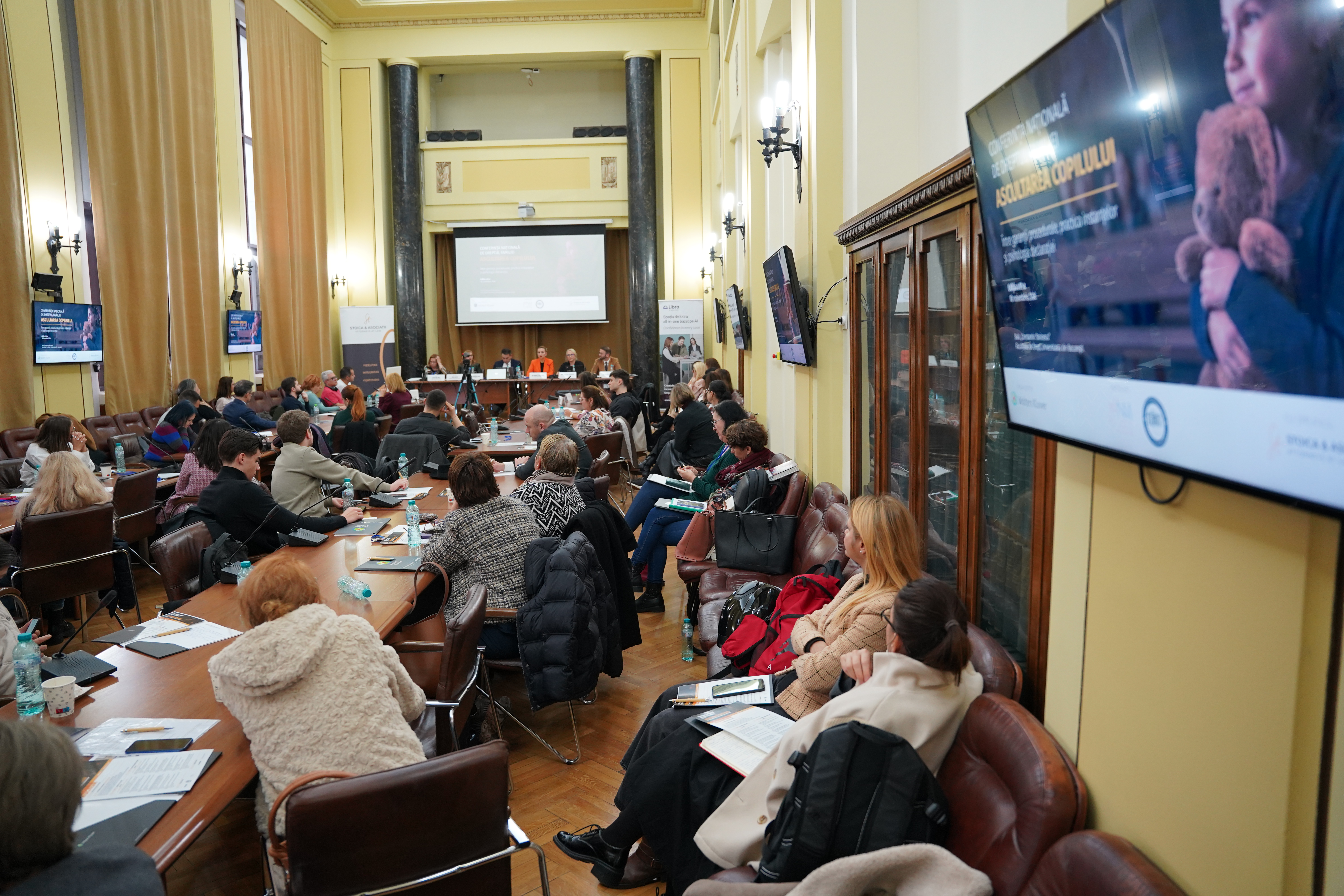
Legal professionals, judges, academics and psychology specialists gathered for the third edition of the National Conference on Family Law – ‘Hearing the Child: Between Procedural Safeguards, Court Practice and the Psychology of Testimony ’, organised by the Faculty of Law, University of Bucharest and the National Institute of the Judiciary , in partnership with Wolters Kluwer Romania and with the support of the law firm STOICA & ASOCIAȚII.
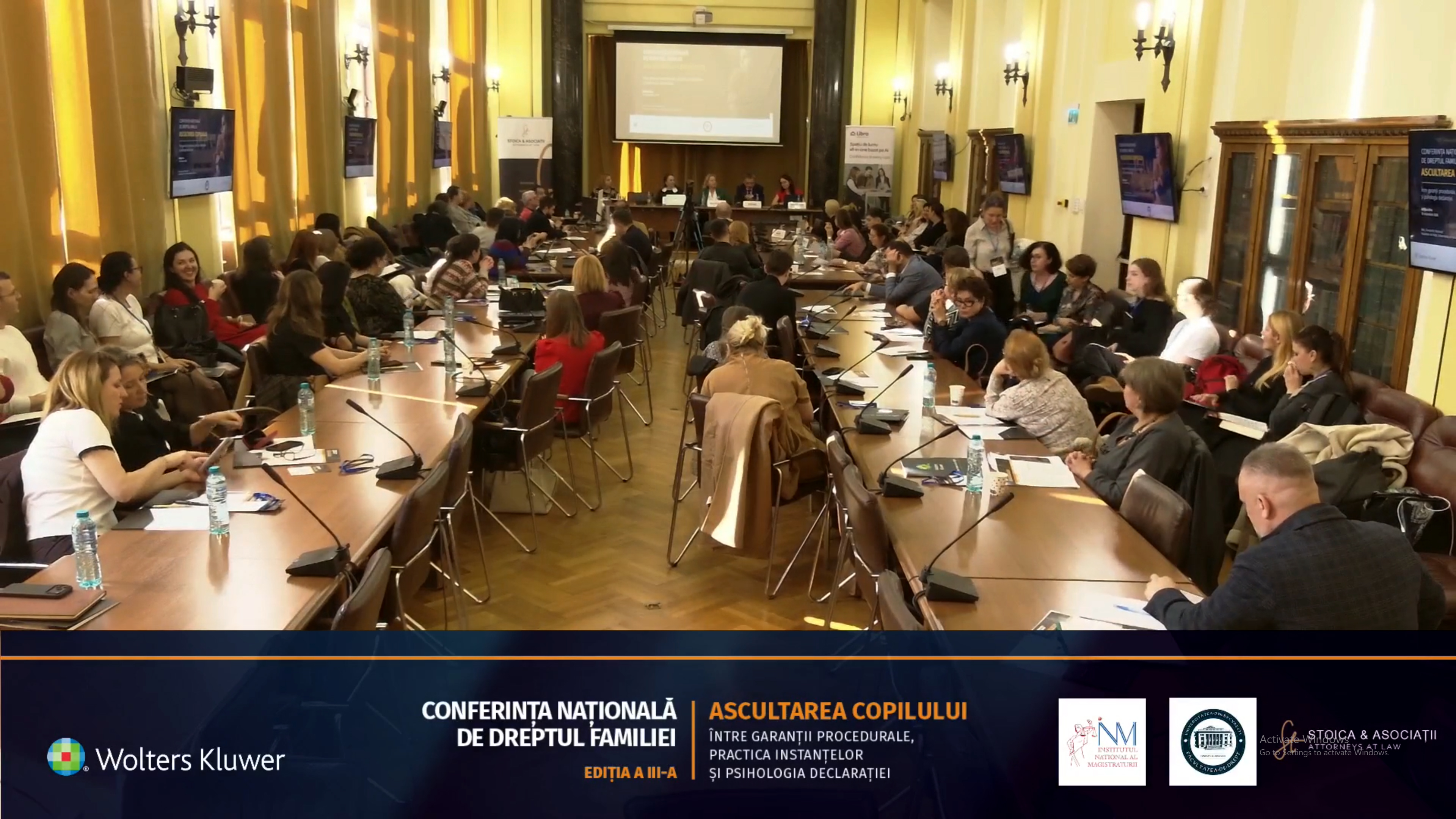
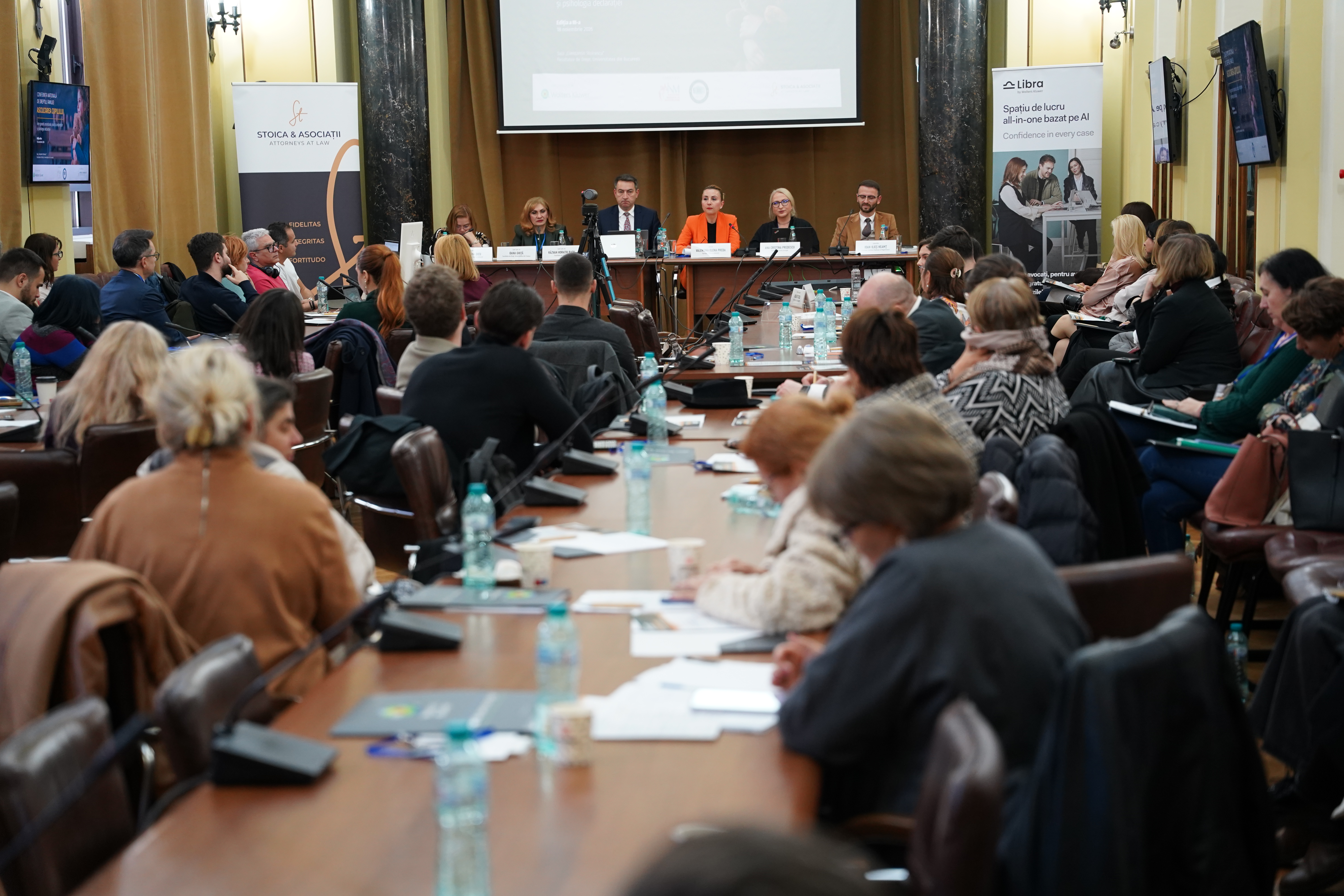
The event took place on 18 November 2026 in the ‘Constantin Stoicescu’ Hall of the Faculty of Law at the University of Bucharest, and brought together judges, prosecutors, lawyers, trainers from the National Institute of Magistracy, psychologists and academics, in an interdisciplinary dialogue on one of the most sensitive issues concerning child protection within judicial proceedings: the child’s right to be heard and the conditions under which this right can be effectively exercised, whilst respecting the child’s best interests.
The online broadcast of the conference was available free of charge on the legislative platform Sintact.ro, as well as on social media channels, providing access to the debates for a wider audience of professionals interested in family law issues.
A fundamental right, with complex legal and human implications
The theme of the third edition stemmed from a legal reality with direct implications for a child’s life. Parental divorce, the determination of the child’s residence, international abduction or involvement in a criminal case may place the child in a situation where they are heard by a judge, prosecutor or psychologist. A child’s right to be heard is guaranteed by law, but the specific manner in which the hearing takes place can influence both the quality of the statement obtained and the effective protection of the child throughout the proceedings.
The importance of this issue is confirmed by the extensive legal recognition of this right: Article 12 of the UN Convention on the Rights of the Child, Article 24 of the Charter of Fundamental Rights of the European Union, and Articles 21 and 26 of Regulation (EU) 2019/1111, at international and European level, and Article 264 of the Civil Code, Article 29 of Law No. 272/2004 and Article 124 of the Code of Criminal Procedure, amongst the key provisions of domestic law.
In practice, the application of these provisions raises fundamental questions: when is it mandatory to hear the child’s views, what are the consequences of failing to do so, what weight should be given to the views expressed by the child, and how should these be reconciled with the principle of the best interests of the child? It is precisely this complexity that justified the conference’s interdisciplinary approach, which brought together the perspective of the courts, the experience of legal professionals and psychological expertise.
Opening of the conference
The conference was opened by Prof. Valeriu Stoica, PhD (Emeritus) – Founding Partner, STOICA & ASOCIAȚII –, Ms Simona Camelia Marcu, Judge – Director of the National Institute of the Magistracy –, Judge Lavinia Valeria Lefterache – High Court of Cassation and Justice, Criminal Division, and Professor at the Faculty of Law, University of Bucharest, and Judge Dr Ioana Roxana Oltean - President of the 9th Juvenile and Family Division of the Bucharest Tribunal, alongside the host, Professor Răzvan Dincă, PhD – Dean of the Faculty of Law at the University of Bucharest.
The opening remarks placed the issue of hearing the child within a broader context, in which the protection of the child’s rights requires not only the existence of legislative safeguards, but also judicial practice tailored to the specific circumstances of each case and genuine collaboration between the professionals involved.
Panel I. The right to be heard
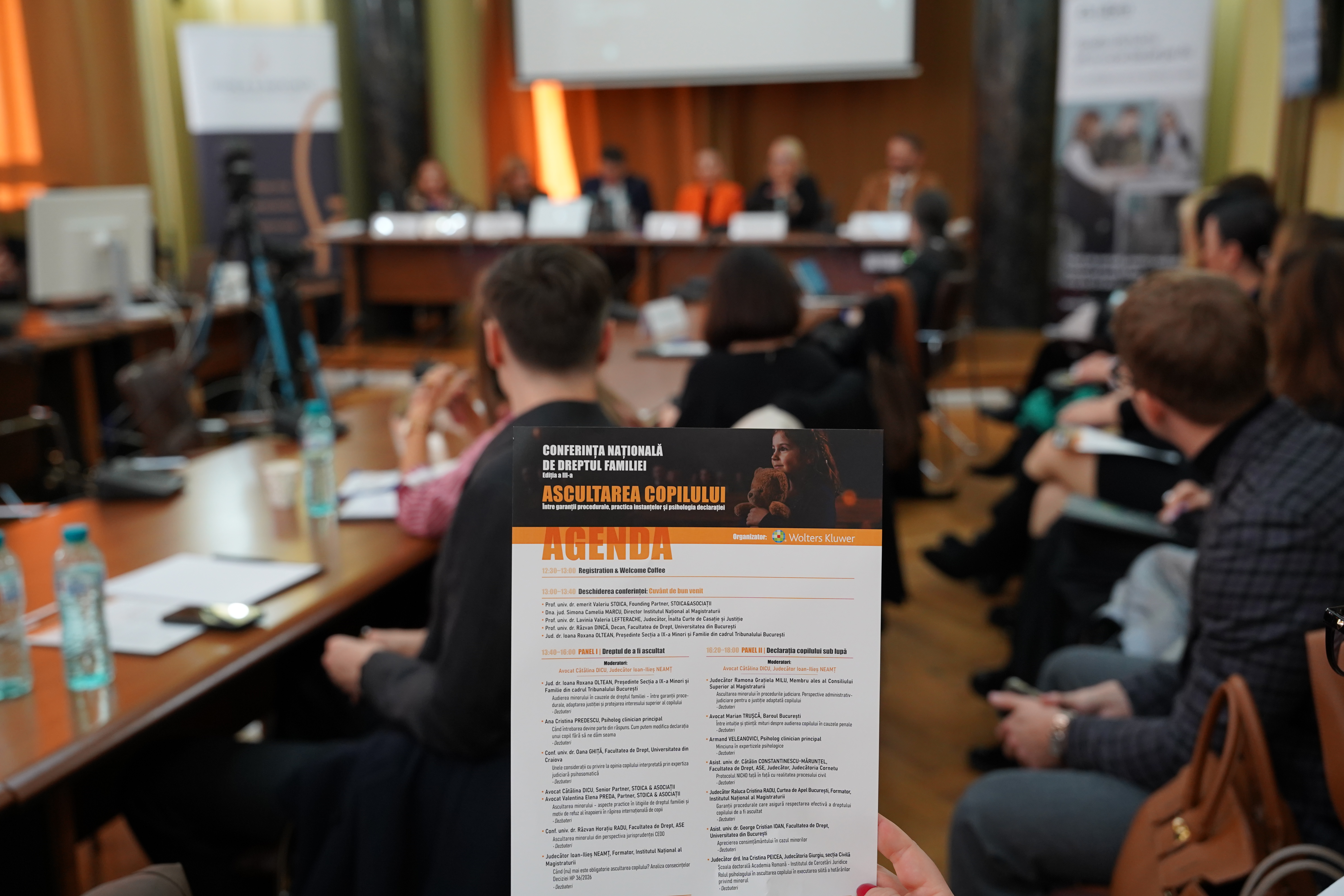
The first panel, ‘The right to be heard’, analysed the main legal and practical difficulties that arise when a child’s opinion must be obtained, interpreted and taken into account in legal proceedings. The programme combined perspectives from psychology, family law, private international law and the case law of the European Court of Human Rights.
Psychologist Ana Cristina Predescu opened the series of presentations with the topic ‘When the question becomes part of the answer. How we can alter a child’s statement without realising it’, focusing the discussion on the effect that the way questions are phrased and the interview technique can have on the information provided by the child.
Associate Professor Oana Ghiță, PhD, addressed the child’s perspective as interpreted through psychosomatic forensic expertise, offering an expert’s perspective on how a child’s statements and behaviour can be analysed in a legal context.
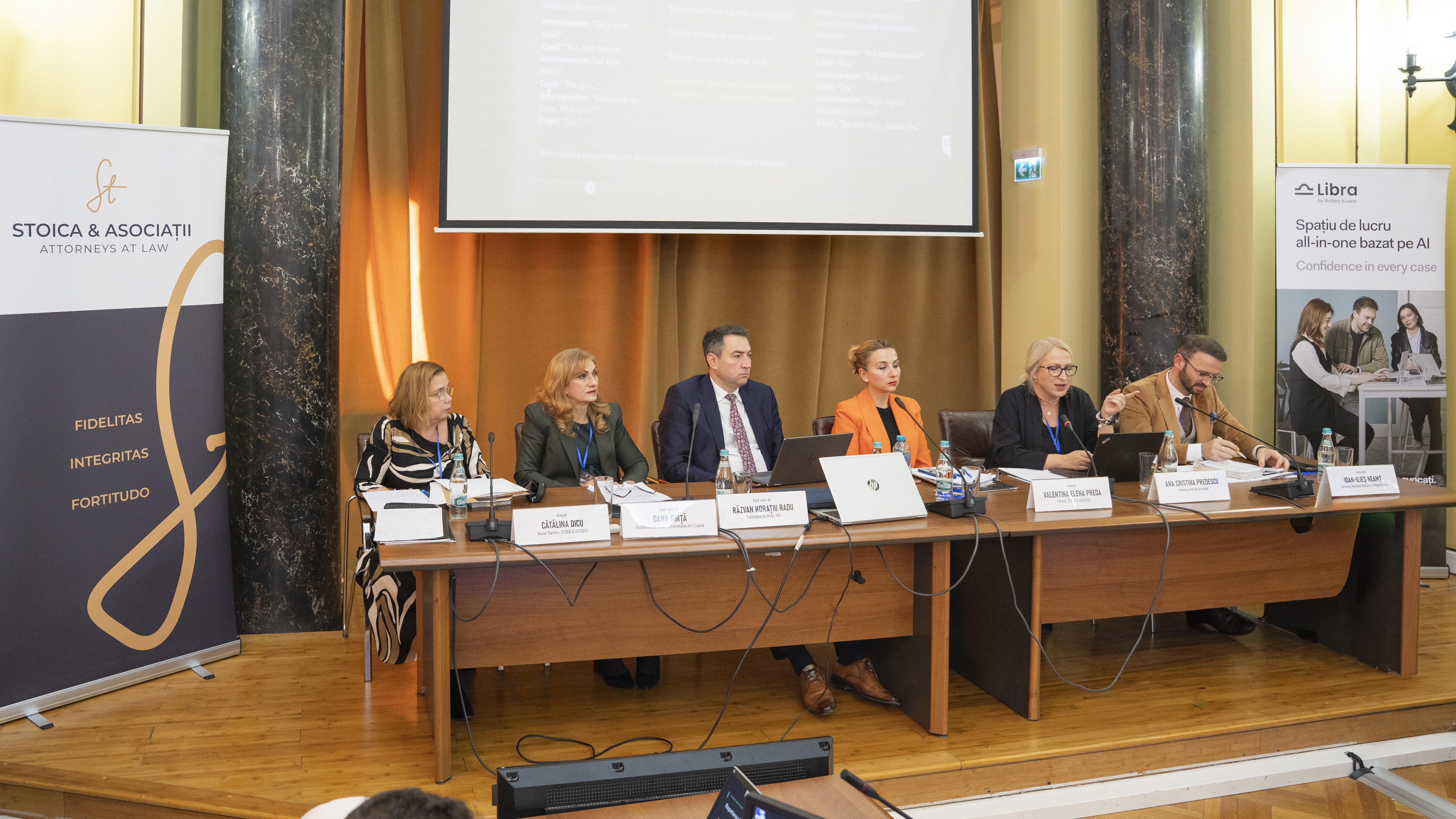
The practical aspects of family law disputes were analysed by Cătălina Dicu, Senior Partner at STOICA & ASOCIAȚII, and Valentina Elena Preda – Partner, STOICA & ASOCIAȚII – who discussed the hearing of minors in family law disputes and the relevance of the child’s views in cases of international child abduction, including in relation to the refusal to return the child.
Associate Professor Dr Răzvan Horațiu Radu supplemented the analysis with a perspective on hearing the child in the case law of the European Court of Human Rights, whilst Judge Dr Ioan-Ilieș Neamț addressed the question ‘When is (or is not) it mandatory to hear the child?’, with reference to the consequences of Decision HP No. 36/2026.
The discussions during the first panel highlighted a fundamental distinction: a child’s right to be heard cannot be reduced to the mere fulfilment of a procedural formality. Hearing a child involves creating the necessary conditions for the child’s views to be freely expressed, understood in context, and assessed in relation to their age, maturity and best interests.
Panel II. The child’s statement under the microscope
The second panel, ‘The Child’s Statement Under the Microscope’, explored in depth the evidential and psychological dimensions of hearing a child’s statement and the difficulties professionals face when assessing it.
Opening Panel II, Judge Ramona Grațiela Milu, an elected member of the Superior Council of the Judiciary, spoke, emphasising the judicial dimension of the issue and the importance that hearing a child’s statement has acquired in court practice.
Lawyer Dr Marian Trușcă delivered a presentation entitled ‘Between intuition and science: myths about hearing children in criminal cases’, highlighting the need for a methodologically grounded approach to hearing children, moving beyond intuitive perceptions of the credibility of their statements.
Psychologist Armand Veleanovici addressed the issue of lying in psychological expert reports, a topic relevant to distinguishing between what can be established through specialist expertise and what remains subject to the judgement of the judicial authority.
Judge Dr Cătălin Constantinescu-Mărunțel analysed the NICHD Protocol in relation to the reality of civil proceedings, highlighting the usefulness of validated interviewing methods and examining the appropriateness of adapting them to the specific features of judicial proceedings.
Judge Radu Raluca Cristina, a trainer at the National Institute of Magistracy (INM), analysed the procedural safeguards that ensure effective respect for the child’s right to be heard, whilst Judge Dr Cristian Ioan addressed the issue of assessing consent in cases involving minors who are victims of sexual offences. Judge Peicea, PhD candidate, raised an extremely topical issue concerning the role of the psychologist in interviewing the child during the enforcement of court decisions relating to minors.
Through the topics addressed, the second panel highlighted one of the central ideas of this edition: a child’s statement must be analysed within a framework that combines legal rigour with the tools offered by the psychology of testimony, avoiding both the over-emphasis on an isolated statement and the downplaying of the child’s opinion by referring exclusively to their age.
Special thanks go to the moderators of this edition, Ms Cătălina Dicu, lawyer and Senior Partner at STOICA & ASOCIAȚII, and Mr Ioan Ilieș Neamț, judge and trainer at the National Institute of Magistracy (INM), who succeeded in challenging the panellists and highlighting the legislative gaps and issues encountered in judicial practice.
From the recognition of a right to its effective exercise
The two panels offered complementary perspectives on the same issue. Whilst the first focused in particular on the child’s right to be heard, the second considered the statement resulting from the hearing and the conditions under which it can be obtained and correctly assessed.
The conference highlighted the need to move from the formal recognition of a child’s right to be heard to the development of judicial practices that ensure its effectiveness. The quality of the hearing depends on the setting in which it takes place, the way questions are phrased, the training of professionals, the avoidance of leading questions, the child’s age and developmental characteristics, and the way in which the opinion obtained is taken into account in the decision-making process.
This perspective is in line with the objective of the 2026 edition: to identify best practices that ensure the child’s right to be heard is effectively upheld, and to advocate for the establishment of specialised courts for minors and families, equipped with hearing rooms adapted to the needs of minors and enabling the specialisation of the professionals involved in these proceedings.
Special thanks go to all the speakers and participants for their academic and professional contributions, for the examples drawn from judicial practice, and for the interdisciplinary dialogue fostered around a topic in which law, psychology and the best interests of the child are inextricably linked.
By organising this conference, the Faculty of Law of the University of Bucharest, the National Institute of Magistracy and Wolters Kluwer Romania, with the support of STOICA & ASOCIAȚII, are continuing their efforts to create a permanent forum for dialogue amongst professionals involved in the application of family law.
Now in its third edition, the National Conference on Family Law consolidates a platform for interdisciplinary debate dedicated to legal issues with a direct impact on the family and society, and lays the foundations for the annual continuation of dialogue between the academic community, magistrates, lawyers, psychologists and other relevant professionals.
The discussions from this year’s conference can be viewed via the following links: https://info.wolterskluwer.ro/conferinta-nationala-de-dreptul-familiei-2026/#lp-pom-text-797
LATEST NEWS
Legal news analyzed by STOICA & ASOCIAȚII’s lawyers